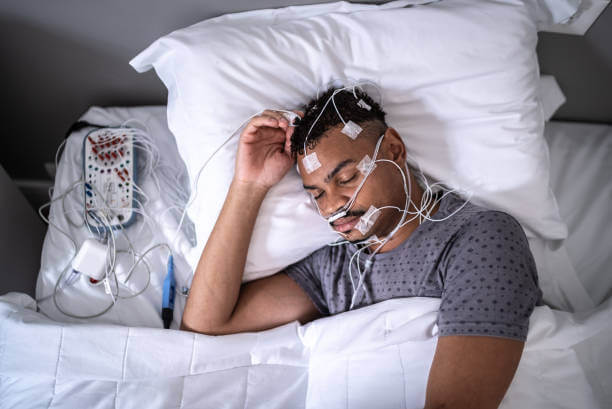
A sleep study, or polysomnography, is the gold-standard examination for diagnosing sleep disorders such as sleep apnea. However, many people are confused about choosing between a sleep study at home or in a hospital. Which is more accurate? Which is more comfortable?
Sleep Study in a Hospital (In-Lab Polysomnography)
The patient sleeps in a dedicated sleep lab equipped with 20–30 sensors that simultaneously record brain waves (EEG), eye movements (EOG), muscle activity (EMG), heart rate, oxygen levels, breathing patterns, and body position.
Advantages
- Highest accuracy — the gold standard, with 95–98% sensitivity
- 24/7 supervision — certified technicians ready to handle technical problems
- Comprehensive diagnosis — can detect narcolepsy, parasomnia, and periodic limb movement
- Split-night study — if apnea is detected, CPAP titration can be done the same night
Disadvantages
- Higher cost: Rp 3–8 million
- First-night effect — sleeping in an unfamiliar environment can affect results
- Waiting time of 2–8 weeks
- Not all cities have adequate sleep labs
Sleep Study at Home (Home Sleep Apnea Test/HSAT)
The patient takes home a portable device that records 3–7 parameters (breathing, oxygen levels, heart rate, sleep position) over 1–3 nights.
Featured Product
ResMed AirSense 10 Autoset
ResMed's best automatic CPAP — adjusts pressure with every breath for precise, comfortable therapy all night long.
View Product Free ConsultationAdvantages
- Maximum comfort — sleeping in your own bed, more representative data
- Affordable cost: Rp 1.5–4 million
- Faster turnaround: results in 1–7 days
- Multiple night recording for more consistent results
Disadvantages
- 80–90% accuracy — can give false negatives in mild sleep apnea
- Cannot detect sleep disorders other than OSA
- Risk of sensors coming loose without a technician
- Requires a separate examination for CPAP titration
Accuracy: Which Is Better?
For moderate-to-severe obstructive sleep apnea, HSAT is fairly accurate (80–90% sensitivity, 85–95% specificity). However, for mild sleep apnea, borderline cases, or sleep disorders other than OSA, an in-lab study is far superior.
Quick Comparison
| Aspect | In-Lab | At Home |
|---|---|---|
| Accuracy | 95–98% | 80–90% |
| Cost | Rp 3–8 million | Rp 1.5–4 million |
| Parameters | 20+ (complete) | 3–7 (basic) |
| Waiting time | 2–8 weeks | 1–7 days |
| Diagnosis | All sleep disorders | OSA only |
Who Is Suited to Each Method?
Choose an in-lab study if: you have serious heart or lung disease, a suspected sleep disorder other than sleep apnea, are under 18 years old, or need same-night CPAP titration.
Choose a home sleep test if: the classic symptoms of sleep apnea are clear (loud snoring, breathing pauses, daytime sleepiness), there are no significant medical comorbidities, or you want a more economical and faster option.
Our Services for You
The most important thing is to get examined as early as possible if you experience symptoms of a sleep disorder. Resindo Medika offers both sleep study options with guaranteed quality and analysis by experienced sleep specialists.