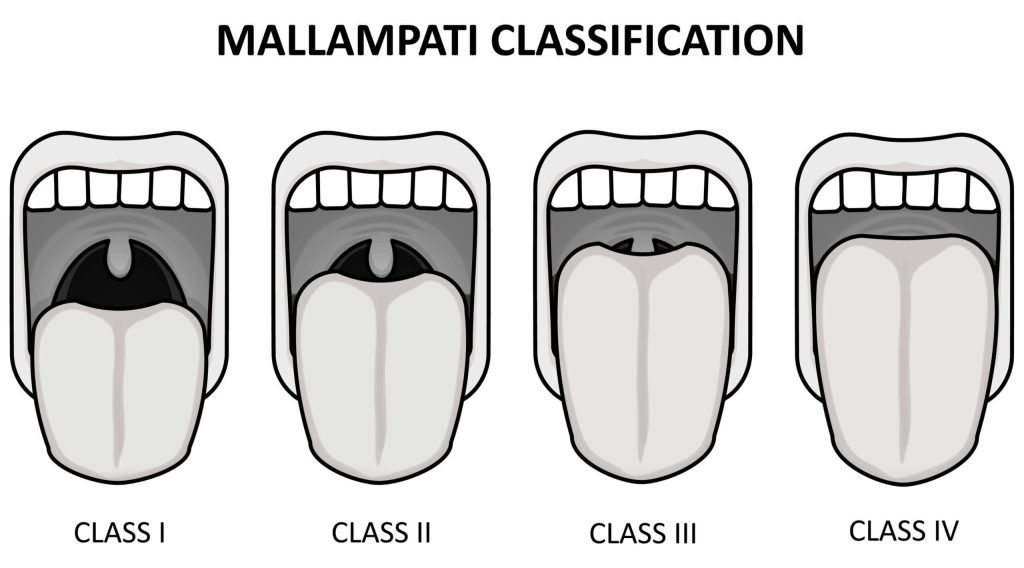
Many doctors use the Mallampati Score to detect and diagnose sleep apnea. It helps physicians estimate whether a person is at risk of sleep apnea based on the structure and visibility of oral tissues. But how accurate is this method as a standalone predictive tool?
What Is the Mallampati Score?
The Mallampati Score is an assessment method introduced in 1985 by Indian anesthesiologist Seshagiri Mallampati. It was originally developed to predict the difficulty of intubation prior to surgery. Over time, it was adopted for evaluating sleep apnea risk due to its direct relationship with upper airway width.
Mallampati Score Classification
Mallampati divides airway conditions into four classes:
Featured Products
ResMed AirSense 10 Autoset
ResMed's best automatic CPAP — adjusts pressure with every breath for precise, comfortable therapy throughout the night.
View Product Free Consultation- Class 1: Tonsils, uvula, and soft palate are fully visible — the most open airway.
- Class 2: Hard and soft palate are visible, including the upper portion of the tonsils and uvula.
- Class 3: Hard and soft palate are visible, but the uvula is only partially visible.
- Class 4: Only the hard palate is visible — highest risk of obstruction.
What Score Is Considered Normal?
Classes 1 and 2 are generally considered normal, indicating a relatively open airway. However, a low score does not mean a person is free from sleep apnea. Conversely, a Class 3 or 4 score does not necessarily confirm a sleep apnea diagnosis, as many other factors also play a role.
Additional risk factors include jaw structure, neck circumference, genetics, age, gender, and body weight. Therefore, the Mallampati Score should be used alongside a comprehensive evaluation — not as the sole determining factor.
How to Manage Sleep Apnea with a High Mallampati Score
The Mallampati Score reflects airway anatomy that cannot be changed through exercise alone. However, several steps can help reduce the severity of symptoms:
Our Services for You
- Maintaining a healthy weight to reduce pressure on the airway
- Addressing chronic nasal congestion
- Avoiding alcohol, smoking, and sedatives before sleep
- Following doctor-recommended CPAP therapy or oral appliance treatment
Consult at Resindo Medika
The Mallampati Score is a useful first step, but an accurate sleep apnea diagnosis requires a sleep test and specialist consultation. Resindo Medika provides sleep diagnostic testservices, ResMed CPAP therapy, and medical consultations to help you fully understand your sleep condition.