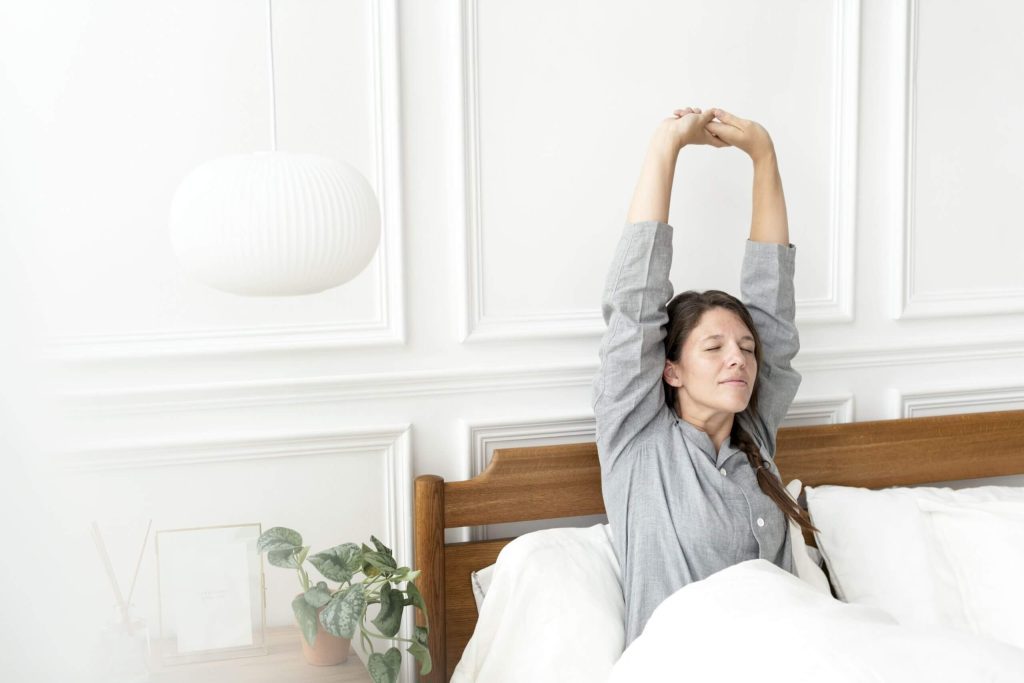
Many people often underestimate the importance of sleep quality until they personally experience the effects of sleep deprivation, which directly impacts their overall health. However, getting quality sleep is not easy for everyone — those who suffer from sleep disorders frequently struggle to get a good night's rest.
There are many factors that can affect sleep quality, ranging from biological, psychological, to sociodemographic factors. Each of these causes has been compiled into an international list of sleep disorder classifications known as the International Classification of Sleep Disorders (ICSD) published by the American Academy of Sleep Medicine. Let's take a look at the types of sleep disorders that exist — do you experience any of them?
Definition of Sleep Disorders
Before discussing sleep disorder classifications, let's first understand what a sleep disorder is. A sleep disorder refers to any change in condition, habits, or sleep patterns that negatively affects sleep quality.
Featured Products
ResMed AirSense 10 Autoset
ResMed's best automatic CPAP — adjusts pressure with every breath for precise and comfortable therapy throughout the night.
View Product Free ConsultationSo, from difficulty sleeping to sleeping too much, both can be considered sleep disorders, as they equally worsen sleep quality and disrupt the overall lives of those affected. What types of sleep disorders are there? Let's explore them based on the following sleep disorder classifications:
Sleep Disorder Classification List
The American Academy of Sleep Medicine has established 6 main categories of sleep disorder classifications in the ICSD third edition. Each category has its own diagnostic criteria and causes to facilitate the classification of sleep disorders. The six categories are as follows:
Insomnia Sleep Disorder
Insomnia is likely a familiar term, but it actually refers not just to a single type of sleep disorder — it is a category that encompasses several distinct types of insomnia.
Our Services for You
Insomnia refers to a sleep disorder that causes difficulty falling asleep, difficulty staying asleep, waking up too easily, and unrefreshing sleep. More specifically, insomnia sleep disorder classifications are categorized by their causes, such as insomnia resulting from poor sleep habits, medication stimulation, or psychological issues.
Sleep-Related Breathing Disorders
The second sleep disorder classification focuses on breathing disturbances that occur during sleep. In general, this category encompasses everything that causes difficulty or inability to breathe during the night.
Although it involves breathing problems, this category is classified as a sleep disorder because it only occurs during sleep. Repeated interruptions to breathing during sleep can lead to deteriorating sleep quality, excessive daytime sleepiness, fatigue, and increased susceptibility to illness.
Obstructive sleep apnea, central sleep apnea, mixed sleep apnea, and cheyne-stokes respiration are some examples of sleep disorders within this category. Generally, this classification of sleep disorders can be managed with CPAP therapy. AirSense 10 Autoset is one CPAP therapy device that can be used to address sleep-related breathing disorder complaints.
Hypersomnia Sleep Disorder
The next sleep disorder classification is hypersomnia. Hypersomnia is a term referring to a condition in which a person experiences excessive daytime sleepiness. The hypersomnia sleep disorder category includes narcolepsy, recurrent hypersomnia, and idiopathic hypersomnia.
The causes of this sleep disorder can stem from poor sleep patterns such as frequent late nights, jet lag, anxiety disorders, and depression. Hypersomnia can also be caused by problems in the nervous system that prevent individuals from controlling their sleepiness, or cause them to remain drowsy even after sleeping for extended periods.
Circadian Rhythm Sleep Disorder
The circadian rhythm is the body's internal biological clock that regulates wake and sleep times. The center of the circadian rhythm is located in the brain's hypothalamus and responds to light and dark conditions. Normally, the body wakes in the morning when it is light, gradually becomes more tired throughout daily activities, and then begins to feel sleepy and falls asleep at night.
However, people with circadian rhythm sleep disorders have a biological clock that differs from most others. Their body naturally does not feel sleepy when it should, or may not sleep at all within a 24-hour period.
This sleep problem can be caused by jet lag, work work, or neurodegenerative conditions. Circadian rhythm sleep disorders can disrupt a person's daily activities, trigger sleep deprivation symptoms, and cause hormonal imbalances in the body.
Parasomnia
The next sleep disorder classification is parasomnia. The parasomnia category covers all unusual behaviors that a person may experience when falling asleep, during sleep, and upon waking.
The characteristics, severity, and frequency of abnormal behaviors during parasomnia vary greatly from person to person. Sleepwalking, sleep paralysis (sleep paralysis), nightmares that cause exhaustion upon waking, and sleep talking are some examples of sleep disorders that fall under the parasomnia category.
Sleep-Related Movement Disorders
Sleep-related movement disorders are a classification of sleep disorders in which a person tends to move more during sleep. Unlike parasomnia, which causes complex movements such as walking or carrying out activities during sleep, movement disorders in this category involve only simple but intense, repetitive movements during sleep.
Sleep-related movement disorders can include restless leg syndrome (restless leg syndrome) and teeth grinding during sleep. A person with this sleep disorder may kick, move their arms, or grind their teeth every 5 to 90 seconds, or move up to 15 times per hour.
This makes those who experience this sleep disorder prone to fatigue and difficulty achieving quality sleep.
How to Detect Sleep Disorders
If you frequently have trouble sleeping at night, you may not have a specific medical condition but rather a sleep disorder as described above. The wide variety of sleep disorders and their causes can be confusing — some people even wonder whether sleep disorders are considered mental health conditions.
If you experience severe sleep disturbances that lead to extreme fatigue, depression, or put you at risk during daytime activities, it is advisable to seek medical attention from a specialist to address your sleep disorder.
First, a doctor will assess your condition, and if you are found to have a potential risk of sleep apnea, they may recommend that you undergo a sleep diagnostic test— a test to evaluate your sleep condition and the severity of sleep apnea the disorder you are experiencing.
Don't worry — you don't have to undergo sleep diagnostic test testing at a hospital. There is now a sleep test that can be done from the comfort of your own room. Resindo Medika is a service provider that offers sleep diagnostic test services including sleep test at home in Jakarta and surrounding areas.
We hope this information is helpful. Take action today — get your condition checked and reclaim the quality sleep you deserve.
Source:
AASM: The AASM International Classification of Sleep Disorders – Third Edition, Text Revision (ICSD-3-TR). Accessed 2023.
Thorpy MJ. Classification of sleep disorders. Neurotherapeutics. 2012 Oct;9(4):687-701. doi: 10.1007/s13311-012-0145-6. PMID: 22976557; PMCID: PMC3480567.
Sleep Foundation: Circadian Rhythm Sleep Disorders, Parasomnia, Sleep-Related Movement Disorders. Accessed 2023.