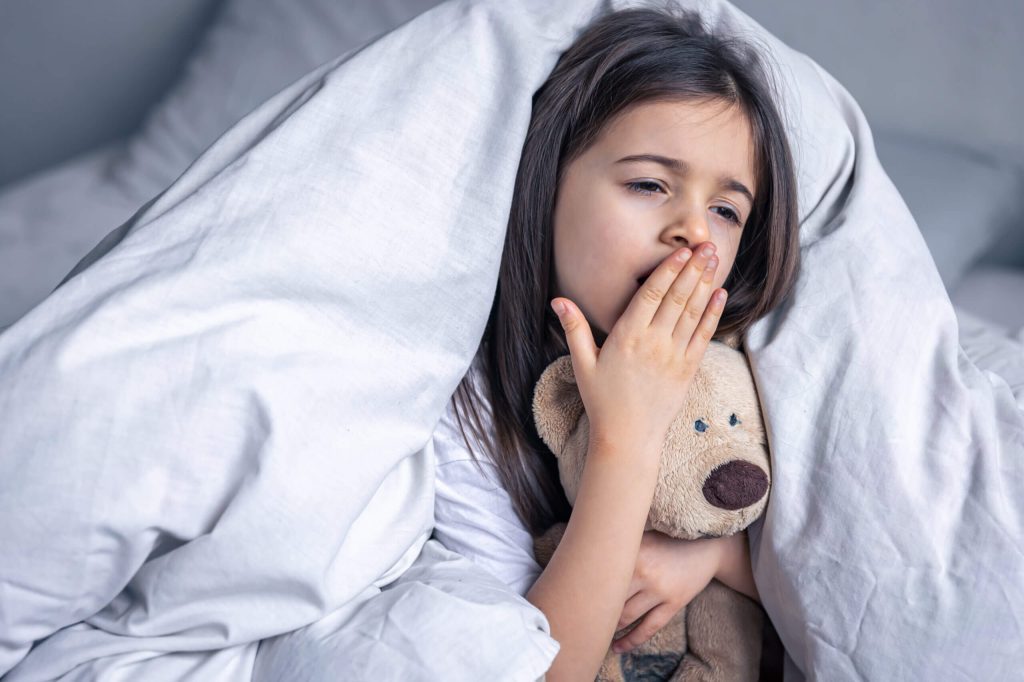
Pediatric sleep apnea is a sleep disorder in which a child repeatedly stops breathing during sleep due to upper airway obstruction (obstructive sleep apnea/OSA) or disrupted breathing signals from the brain (central sleep apnea/CSA).
Sleep Apnea in Children vs. Adults: Key Differences
Unlike adults, sleep apnea in children is more commonly caused by enlarged tonsils and adenoids rather than obesity. The symptoms are also more subtle: instead of daytime sleepiness, children may present with hyperactivity and behavioral issues that are often mistaken for ADHD.
Warning Signs of Sleep Apnea in Children
Nighttime Symptoms
- Loud, habitual snoring – occurring almost every night, accompanied by other symptoms
- Witnessed apnea (breathing pauses) – parents observe the child stopping breathing, followed by gasping
- Mouth breathing – blocked nasal passages leading to dry mouth in the morning
- Restless sleep – frequent position changes or sleeping in unusual positions
- Enuresis (bedwetting) – a previously dry child begins wetting the bed again at night
Daytime Symptoms
- Hyperactivity and impulsivity (often mistaken for ADHD)
- Declining academic performance
- Growth concerns: underweight or height below the expected growth curve
- Morning headaches
Causes of Sleep Apnea in Children
1. Enlarged Tonsils and Adenoids (Most Common Cause)
Enlarged tonsils and adenoids obstruct the airway, particularly in children aged 2–8 years. Grade 3–4 tonsils (narrowing the airway by more than 50%) are frequently the primary cause of OSA in children.
Featured Products
ResMed AirSense 10 Autoset
ResMed's top automatic CPAP — adjusts pressure with every breath for precise, comfortable therapy throughout the night.
View Product Free Consultation2. Obesity
13% of Indonesian children are obese (Riskesdas 2018). Obese children have a 4–6 times higher risk of sleep apnea. Even after tonsil surgery, 60% of obese children still experience OSA.
3. Craniofacial Abnormalities
Conditions such as Down Syndrome, Pierre Robin Sequence, and micrognathia (small jaw) increase the risk of OSA by anatomically narrowing the airway.
4. Allergies and Asthma
Chronic allergies cause persistent nasal congestion and enlarged adenoids, worsening existing OSA.
Our Services
Impact on Growth and Development
- Cognitive: 5–10 point IQ reduction, learning difficulties
- Behavioral: 25–50% of children with OSA are diagnosed with ADHD
- Growth: disrupted growth hormone secretion, stunting
- Cardiovascular: hypertension and cardiac enlargement in children
Diagnosis: Pediatric Sleep Study
The gold standard for diagnosing sleep apnea in children is pediatric polysomnography. OSA criteria for children are stricter than for adults: an AHI of 1–5 is considered mild, while an AHI >10 is considered severe. Home sleep tests are not recommended for children due to a high risk of false negatives.
Treatment
1. Adenotonsillectomy
Surgical removal of the tonsils and adenoids is the first-line treatment. Success rates reach 70–90%, with complete resolution in 60–80% of cases among children with normal body weight.
2. CPAP for Children
Recommended when surgery is not an option, OSA persists after surgery, or a neurological condition is present. Requires child-specific masks and intensive family support.
3. Weight Management
A structured weight-loss program targeting a 5–10% BMI reduction over 6 months, involving the entire family.
When Should You See a Doctor Immediately?
Seek medical attention promptly if your child: has clearly visible breathing pauses during sleep, snores loudly more than 3 nights per week, experiences bedwetting after age 6, shows a significant drop in school performance, or has recurrent throat infections more than 4 times per year.
Sleep apnea in children is a serious condition that affects growth, development, and quality of life. Early diagnosis and treatment can prevent long-term consequences and give your child the best chance to thrive.