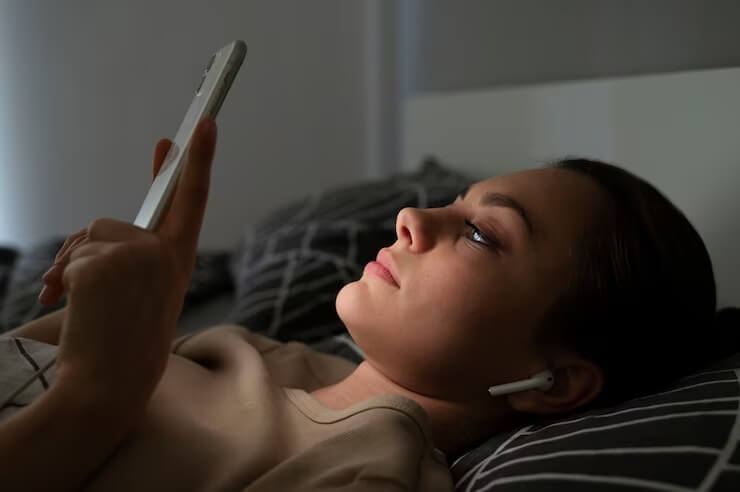
In the digital age, using smartphones, laptops, and tablets has become an inseparable part of daily life. Many people are used to checking social media, watching videos, or reading the news before bed. However, this habit significantly affects sleep quality through several interconnected mechanisms.
The Mechanism of Disruption: Blue Light and the Brain
Electronic screens emit blue light with a wavelength of 380–500 nm. This blue light sends a signal to the hypothalamus that it is still “daytime,” which:
- Suppresses melatonin production – the hormone released by the pineal gland as a “time to sleep” signal. Blue-light exposure 2 hours before bed can reduce melatonin by up to 22%
- Delays the sleep phase – the biological clock shifts back, making it hard to sleep at the normal time
- Reduces the proportion of REM sleep – the sleep phase critical for memory consolidation and mental health
The Impact of Digital Content on the Brain
Besides blue light, konten consumed before bed is also problematic:
Featured Product
ResMed AirSense 10 Autoset
ResMed's best automatic CPAP — adjusts pressure with every breath for precise, comfortable therapy all night long.
View Product Free Consultation- Scrolling social media activates the reward system (dopamine) that makes it hard for the brain to “stop”
- Negative news and emotionally provocative content raise cortisol and alertness
- Constant incoming notifications prevent the relaxation stage needed for sleep onset
The Link to Sleep Apnea
Excessive gadget use before bed does not directly cause sleep apnea, but it worsens it through: total sleep loss that weakens pharyngeal muscle tone, delayed sleep that reduces time in the proper position, and increased anxiety that raises sleep fragmentation.
Practical Strategies: Digital Bedtime Hygiene
Screen Time Limits
- Turn off all screens at least 30–60 minutes before bed (ideally 90 minutes)
- Replace them with reading a physical book, light stretching, or meditation
- Use a physical alarm, not a smartphone, so you're not tempted to check notifications
Blue Light Filters
- Enable “Night Shift” (iOS) or “Night Mode/Blue Light Filter” (Android) after 7 PM
- Use anti-blue-light glasses if you must use screens at night
- Reduce screen brightness to the minimum that's still readable
Bedroom Zone
- Don't keep your smartphone in the bedroom – charge it outside the room
- No TV in the bedroom
- Use the bedroom only for sleep and sleep-preparation activities
Changing digital habits takes 2–4 weeks to show results on sleep quality. If after a nighttime digital detox you still experience significant sleep disturbances, consult a sleep specialist at Resindo Medika for further evaluation.